No audio available for this content.
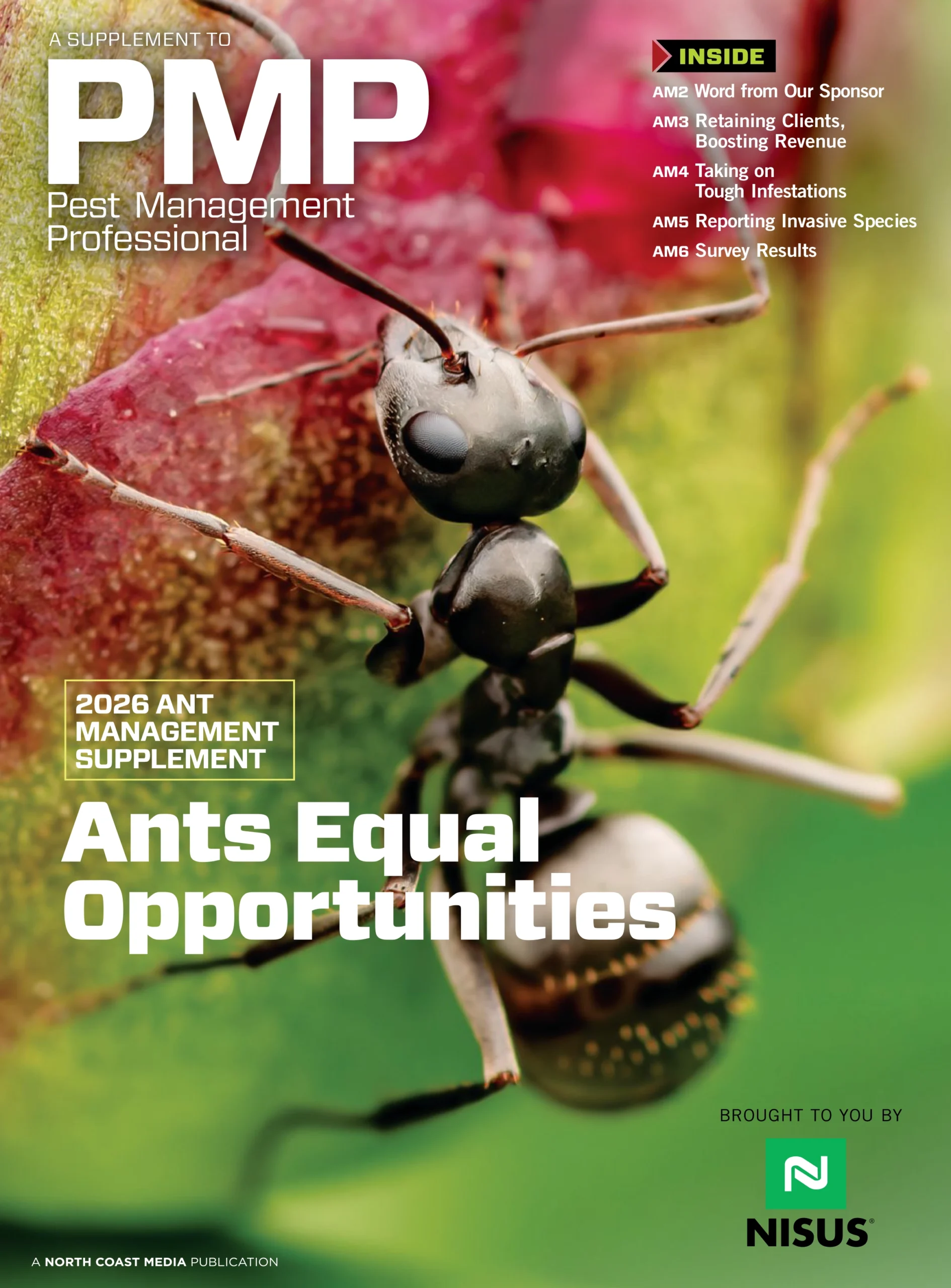
Ants remain a cornerstone as the source of callbacks for PMPs, draining time, profit and customer confidence. This guide gives PMPs the strategies, insights and field-tested methods needed to reduce callbacks, sharpen identification skills and deliver consistent results.
What you’ll learn inside
This supplement brings together top experts, real-world case studies and national survey data to help you strengthen your ant management program. You’ll explore how to identify conducive conditions, from mulch beds and potted planters to structural entry points and food sources — all highlighted as key contributors to infestations. “Potted planters, mulch and flower beds… are all potential sites where ants can establish a colony.”
You’ll also gain communication strategies proven to build trust and reduce callbacks. “It is extremely important for a PMP who wants to resolve any ant problem to make a positive ID,” says Scott Campbell, president of Abode Pest Solutions in Sorrento, Fla. “No guessing which ant it might be, because every ant species has a different biology and behavior.”
Tools and tactics that elevate your results
You’ll learn how PMPs integrate borate-based products, liquid baits, granular applications and exclusion techniques to achieve lasting control. The supplement also highlights how sealing entry points, modifying landscapes and refining treatment protocols can dramatically reduce callbacks.
Download the supplement
If you want to cut callbacks, strengthen customer relationships and elevate your ant management expertise, this guide is your must-have resource for 2026 and beyond. Download it and step into the season with confidence, clarity and the strategies that set top PMPs apart.