Listen to this content
Remember playing Space Invaders at the local arcade back in the 1980s? Or perhaps a retro version of it since? Defending your territory against rows of pixelated aliens started out easy, but as soon as you cleared a screen, the next level fired up with faster action, trickier dropping patterns, and enemies coming at you from entirely new angles.

In pest management, dealing with real-world invasive species often can feel like standing in front of that arcade cabinet: When the enemy changes its movement patterns, you have to change tactics and master new “levels.”
Derrek Pendergraff, owner of Derrek’s Pest Control in Leavenworth, Ind., is a big believer in customer education about what professional pest control is about. That includes using his company’s social media channels to discuss invasive species whenever there is news about a given species. In his market, the emerald ash borer (Agrilus planipennis) continues its reign of terror on local woods and landscapes.
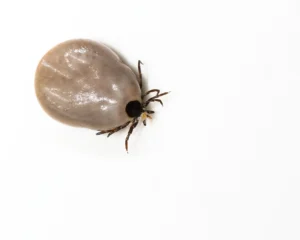
“Another one we’re keeping an eye out for is currently in Kentucky, the Asian longhorned tick,” Pendergraff adds, referring to Haemaphysalis longicornis. “They can be detrimental to the health of people, pets and livestock.”
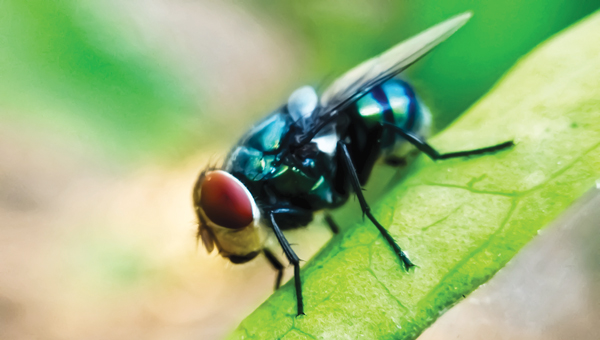
The New World screwworm (Cochliomyia hominivorax, or NWS) has captured national attention since reappearing this year in the U.S. after a 60-year eradication period. Pendergraff says that while he doesn’t expect NWS to become a structural pest concern, he could see industry training programs “add a section of study for applicators to be able to identify and answer questions about the parasite” in the not-so-distant future.
A faster rate of growth
In February, Clemson (S.C.) University published a study that found that in the Southeastern U.S. specifically, invasive species are entering new markets faster than scientists can study them. Florida, in particular, is a hotbed for invasive insects. One study found that 450 non‑native arthropod species were detected in the state between 1990 and 2023. Nearly 300 of these species had never been recorded in North America before.

The Clemson study lumped agricultural and forest insects along with structural pests. Dr. Faith Oi, a Pest Management Professional Editorial Advisory Board (PMP EAB) member and extension professor of the University of Florida (UF) in Gainesville, confirms that the structural pest management industry should “absolutely” take note.
“What is more concerning is that there is no formal surveillance system for urban structural pests like there is for key agricultural pests,” she adds, “which is why pest control will always be needed.”
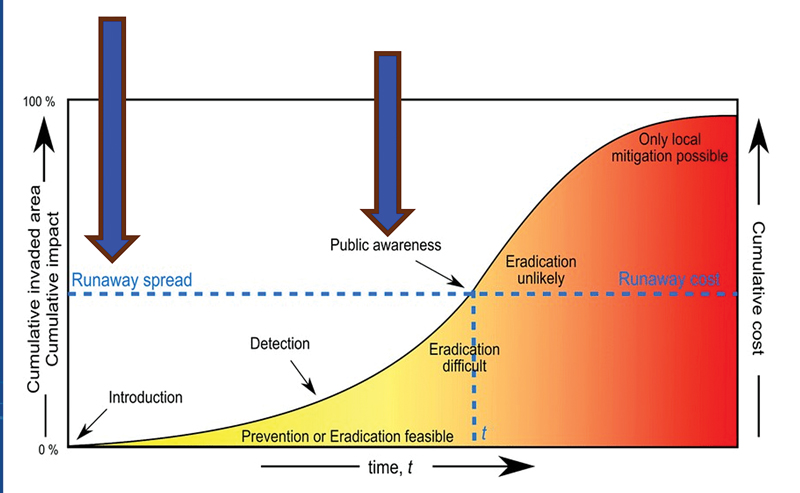
Dr. Oi, who also is director of Florida’s Pest Management University program, says there always will be a need for professional pest management based purely on the biological invasion curve (see chart at the bottom of this page). “There are no federal agencies or global coordinated efforts tasked with surveillance of structural pests, except for red imported fire ants (Solenopsis invicta),” she adds. “By the time there is ‘public awareness,’ eradication is almost impossible, and costs become prohibitive.”
Dan Baldwin, MPH, BCE, REHS/RS, FRSPH, a PMP EAB member, says the remainder of 2026 might be worse nationwide before it gets better, thanks to the Super El Niño weather phenomenon at play.

“It probably will extend the high-pressure season of common pests as well,” adds Baldwin, VP of technical and training services for Ogden, Utah-based Hawx Pest Control. “So, you have the overall climate expanding ranges, and weather affecting activity periods.”
Dr. Oi says a number of additional factors are related to the increased spread of invasive species, such as:
- Selected breeding in the wild — like hybrid fire ants (S. invicta and S. richteri) — bolsters the ability of these insects to adapt and increase their distribution range.
- In many cases, there is a better level of reporting and analyzing population patterns. For example, invasive termites are being tracked by the North American Termite Survey working group, online at TermiteSurvey.org.
- “Human-mediated transport,” which is a fancy way of saying pests invade new places thanks to worldwide shipping routes and passenger travel.
- New home construction continues to encroach on what were previously animal habitats.
Regarding this last point in particular, Dr. Oi notes that in September, UF is launching a wildlife track to not only help PMPs learn animal control skills as a service, but also to protect themselves on the job.
Power up your toolkit
Dr. Oi points out that, because there is no federal agency that coordinates surveillance specifically for urban structural pests, PMPs are the front line and critically important to intercepting invasive species.
“I’ve been doing this for a long time and, every time an invasive species comes across my desk, it’s from a sharp PMP who knows that whatever they are dealing with, it’s not ‘normal,’” she explains. “PMPs are doers. Creating a reference collection for what is ‘normal’ in their area is a pro tip.”
Considering that some invasive species must be put under a microscope to be identified, Dr. Oi suggests pest control companies make room in their budgets for at least one digital microscope for their team.
“Magnification is inexpensive these days,” she says.
Top 10 costliest invasive pests worldwide*:
- Mosquitoes (Aedes spp.)
- Rodents (Rattus spp. and Mus spp.)
- Feral/outdoor cats (Felis catus)
- Red imported fire ants (Solenopsis invicta)
- Spongy moths (Lymanntria dispar)
- Brown tree snakes (Boiga irregularis)
- Formosan subterranean termites (Coptotermes formosanus)
- Boll weevils (Anthonomus grandis)
- New World screwworms (Cochliomyia hominivorax)
- African honey bees (Apis mellifera scutellata)
* Data calculated for both cumulative damage and management costs (in billions of 2017 U.S. dollars) between 1970 and 2017.
SOURCE: UF/IFAS EXTENSION/PEST MANAGEMENT UNIVERSITY