Listen to this content
The re-emergence of the New World screwworm (Cochliomyia hominivorax, or NWS) in the U.S. has pest management professionals (PMPs) concerned across the nation, but especially in states where the invasive pest has been detected — which, at press time, have remained steady in only New Mexico and Texas.
It had been declared an eradicated pest in the U.S. in 1966 and had stayed that way, except for a contained outbreak in the Florida Keys in 2017, until June 2026.

The bottom line for PMPs? You shouldn’t be worried, but you should stay vigilant and observant.
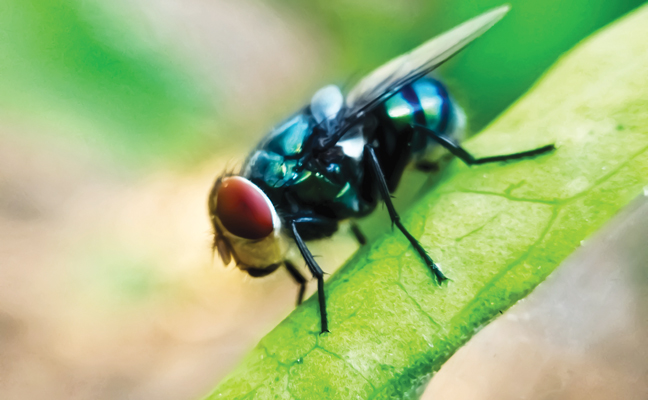
NWS is a fly similar to a number of other shiny, metallic blue-green flies (commonly referred to as calliphorids, or blow flies), but whose larvae uniquely feed on the living flesh of warm-blooded animals. This can lead to significant tissue damage that can severely incapacitate or even kill the animal if left untreated.
NWS is primarily a concern for the animal agriculture industry, wildlife management and to a lesser extent, veterinarians who treat small animals like dogs and cats. At press time, no cases of origin have been reported in humans in the U.S.
Even Southwestern PMPs are very unlikely to encounter the adult fly during account stops. This is because the adult fly generally has a small population, which is sporadically distributed in the environment. The adult fly will not likely be found around garbage bins or other locations containing rotting organic matter — places where house flies (Musca domestica) and other types of flies are commonly found.

Similarly, NWS larvae feed only on live tissue, so they will neither colonize roadkill nor be found in spilled garbage.
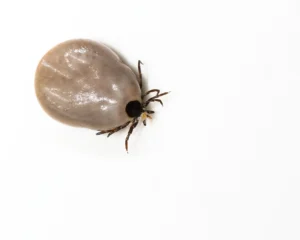
The most likely scenario for a PMP encountering NWS is when an active larval infestation is spotted in an animal. Farm animals, stray dogs and cats, and common wildlife like deer, raccoons and opossums are most at risk — especially if they have an open wound. Although uncommon, infestations have been documented starting from something as small as a vacated tick bite.
If you suspect a possible case of NWS, report it promptly to the state. Do not move the afflicted animal or person from the site in which it was detected. This is because the fly primarily spreads to new areas by the movement of infested animals.
If you are in an area where NWS has been detected, be sure to keep open wounds clean and covered, no matter how small or where the wound is located on the body. Wear loose-fitting, long-sleeved shirts and pants, hats and socks to limit exposure of the wound site.
Use a U.S. Environmental Protection Agency-registered insect repellent or treat clothing and gear with products containing 0.5 percent permethrin, as recommended by the U.S. Centers for Disease Control and Prevention.
Last but not least, stay up to date online at Screwworm.gov.