Listen to this content
Like almost all living animals, spiders attempt to settle in where they can find food with the least amount of energy to obtain it. The first question to ask is, “Why are the spiders selecting this location?” You need to think like a spider.
For spider species that rely on webbing to catch their prey, which are the majority of what we encounter as pest management professionals (PMPs), nighttime lighting is probably the No. 1 reason why they choose their spots. It helps to have points on a tree, shrub or structure to attach their web.
Effective removal method
I remember the first time I heard a technician in Florida complain about working during the holiday season. I was taken aback: “Are you kidding? That’s the best time to collect cash tips!”
Of course, I was thinking about the northern climate, where spiders are not very active outdoors in the winter. He set me straight: “Homeowners put up their Christmas lights, and that means an extra 15 minutes at each stop to remove webs that spiders begin on the strings.”
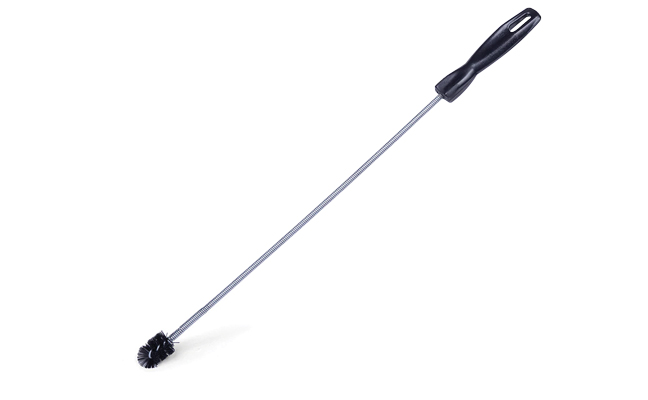
Speaking of Florida, back in 1987, I learned how a maintenance company was providing non-chemical spider management in Boca Raton by removing overhead cobwebs with long-pole spider brushes. When I asked them why they didn’t just spray for spiders, they pointed out that most of their multi-family residential accounts were built near retention ponds. Because it rains heavily almost every afternoon in the summer, the pesticide would end up in the ponds. Besides, the pesticide does not remove the webbing and egg sacs.
I was excited to bring this information to the Purdue University Pest Management Conference in January 1988. The rest is history: Distributors bought into it, and today, cobweb dusters are a standard tool.
Tips for taking action
Here are a few more proactive spider management tasks to take:
- Redirect lighting. Put exterior lighting on a motion detector or mount lights away from the building. This will pull the night insects away from the structure and thereby pull the spiders away as well. In residential accounts in particular, garage doors cannot be sealed. Keeping the night light on by the garage door guarantees you are going to get spiders in the garage.
- Consider airflow. What can be done to redirect or minimize airflow into a building to prevent flies and other spider prey from sailing in? Is the screen mesh too large? Are doors left open that can be closed?
- Maintain the landscape. Keep shrubbery to a minimum adjacent to any structure. Keep the grass cut low. High grass can harbor thousands of spiders. Avoid clutter and debris stored near and adjacent to a structure.
- Take a closer look at the exterior. Plug or screen weep holes, which serve as excellent spider harborage and entrance ways.
- Inspect everything. Hollow open pipes on patio chairs, unopened patio umbrellas, firewood stacks and mailboxes are all known to harbor spiders.
- Find out about new storage moves. Before your customers bring their boats or trailers into their garages to store for the season, ask them to knock off any insects and spiders first.
- Minimize crawlspace moisture. Ventilate adequately to discourage both insects and spiders.