Listen to this content
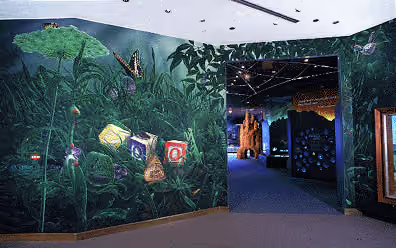
The Smithsonian’s National Museum of Natural History received a nearly $8 million donation from the Gary W. Rollins Foundation and Orkin to transform a section of the museum into the O. Orkin Insect Zoo, creating an adjoining education and engagement space. The refurbished exhibition halls are set to open in spring 2027 and will feature new, vibrant demonstration areas where visitors can experience live feedings, interactive activities, larger-than-life insect models and compelling exhibition content.
“We believe some of the most meaningful learning happens when curiosity is sparked at an early age,” Kathleen Rollins, a trustee and executive director of the Gary W. Rollins Foundation, said in a news release. Gary W. Rollins is Chairman Emeritus of Rollins Inc., which owns the Orkin brand. “The Smithsonian is one of our country’s preeminent learning venues that makes science exciting, accessible and memorable for children, families and school groups. Our hope is that these new experiences will spark a lifelong curiosity about the natural world and inspire the next generation of scientists, enthusiasts and advocates.”
The Gary W. Rollins Foundation, named after a Pest Management Professional (PMP) Hall of Famer (Class of 2012), also endowed the animal care manager position, a role responsible for overseeing the care and propagation of the zoo’s live animal collection. The animal care manager will also lead educators and volunteers to provide visitors with insight into insects and arthropods.
The update marks a major milestone in the history of the museum’s insect zoo, which is the oldest continuously operating insect zoo in the United States. Since 1976, the zoo has given generations of visitors up-close and personal experiences with several insects. The space was officially named the O. Orkin Insect Zoo in 1994 in honor of Orkin Pest Control founder Otto Orkin, who is a PMP Hall of Famer (Class of 1999).
“In celebration of Orkin’s 125th anniversary with America’s 250th birthday, we are honored to support the Smithsonian and our shared mission of education, discovery and stewardship,” Pat Chrzanowski, president of Orkin North America, said in the release. “We’re excited to help bring this historic insect zoo into the future and inspire budding insect scientists.”
The exhibition will also be complemented by a transformation of the adjoining hall into the “Investigation Zone.” The experiential learning space will be one of the largest engagement spaces inside the museum. It will host museum educators and scientists who will introduce visitors to arthropods, the largest group of animals that contains 80 percent of all species on the planet.
“As humans, it’s easy to forget the fact that insects and other arthropods rule the world in terms of biomass,” Sant Director of the National Museum of Natural History Kirk Johnson said in the release. “With this generous gift from the Gary W. Rollins Foundation and Orkin, we can immerse more visitors in their incredible world and showcase the outsized role these fascinating creatures play in sustaining life on our planet.”
About the National Museum of Natural History
The National Museum of Natural History is one of the most visited natural history museums in the world. The museum opened in 1910, and it is dedicated to maintaining and preserving the world’s most extensive collection of natural history specimens and human artifacts.