Listen to this content
Mosquitoes remain among the most significant and persistent pest groups worldwide, with more than 3,490 species identified. While many species are simply a nuisance, others serve as vectors of serious diseases such as malaria, dengue, Zika virus and West Nile virus.
In pest management, control efforts typically focus on a limited number of species that pose the greatest public health risks. Despite their diversity, mosquitoes share key biological and behavioral traits that can be leveraged for effective control. An effective mosquito management program should follow an integrated approach. Try using BITE as a mnemonic device:
B is for breeding site removal

Routine inspection and maintenance are essential for reducing mosquito populations. Key actions include:
- Removing standing water from containers, tires and gutters
- Draining or modifying areas prone to water accumulation
- Treating unavoidable water sources with appropriate larvicides
I is for impacting populations
For adult mosquitoes, barrier treatments are a common strategy. Such applications target mosquito resting sites such as vegetation and structural
perimeters. Best practices include:
- Targeting shaded resting areas and the undersides of foliage
- Avoiding flowering or edible plants to protect pollinators
- Following all directions per the product label
- Maintaining proper equipment and application techniques
- Considering environmental conditions and local ecosystems
Larvicides, meanwhile, are essential for preventing mosquito development. Selection depends on site conditions and species. Common categories include:
- Biological larvicides such as Bacillus thuringiensis israelensis (BTI), Bacillus sphaericus and spinosad
- Insect growth regulators (IGRs) such as methoprene
- Larvicidal oils
T is for timing of applications
Apply treatments strategically based on mosquito activity and environmental conditions. Timing plays a critical role in control effectiveness.
- Reapply barrier treatments every three to four weeks as needed
- Begin treatments prior to peak mosquito season
- Monitor environmental conditions to adjust timing accordingly
E is for exclusion
Preventing mosquito entry is a key component of control:
- Seal cracks and gaps around structures
- Install door sweeps
- Maintain intact window screens
- Use air curtains in high-traffic areas
Exclusion measures, when combined with other strategies, significantly reduce indoor mosquito activity. Effective mosquito management requires a comprehensive, integrated approach that targets all stages of the mosquito life cycle. By combining breeding-site reduction, targeted treatments, strategic timing and exclusion practices, pest management professionals can reduce mosquito populations and mitigate the risks of mosquito-borne diseases.
Mosquito biology basics
Both male and female mosquitoes feed on plant nectar for energy. However, only females require bloodmeals to support egg development.
Female mosquitoes locate hosts using a combination of well-documented cues, including:
- Carbon dioxide (CO2)
- Body odor
- Heat
- Moisture
- Visual contrast
Understanding these cues supports more effective control strategies, including targeted trapping, habitat modification and environmental management.
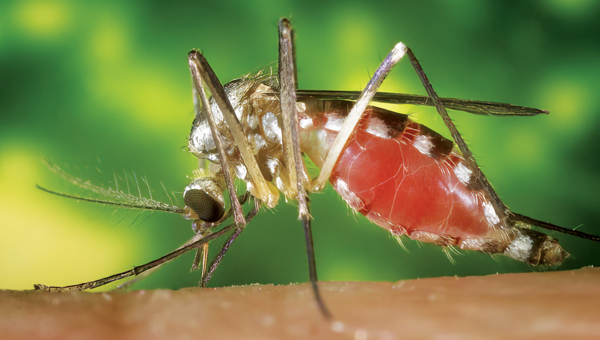
Mosquito larvae develop in a wide range of aquatic habitats, including natural sites such as tree holes and phytotelmata (accumulated water in plant cavities), as well as artificial containers like tires, clogged gutters and flooded areas. These environments provide organic material and microorganisms that serve as larval food sources.
In colder climates, mosquitoes survive unfavorable conditions through diapause or dormancy. For example:
- Culex species overwinter as adult females and become active in spring.
- By comparison, the eastern treehole mosquito (Aedes triseriatus), a primary vector of La Crosse encephalitis, overwinters as eggs in northern regions and may persist as larvae in warmer climates.
Understanding these seasonal patterns improves the timing and effectiveness of control programs.