Listen to this content
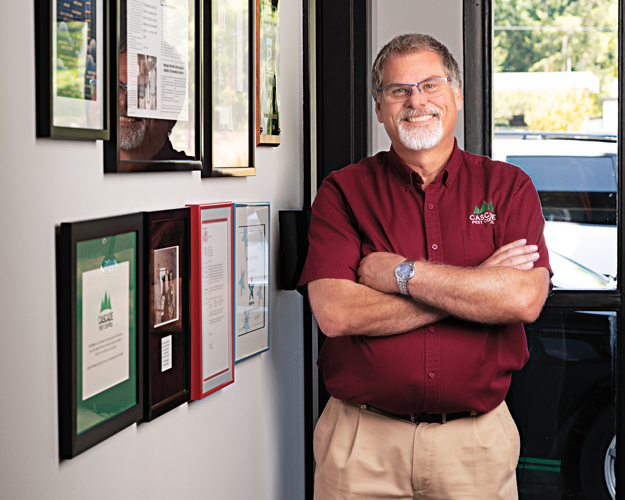
April 1, 1979, was just another April Fool’s Day for many, but it was the start of something big for Kurt Treftz, ACE. It was the official opening day for his new company, Cascade Pest Control. The headquarters were in his home in Redmond, Wash., and his immediate focus was on carpenter ant and rodent control because he felt, as he admits today, that he could “do it better.”
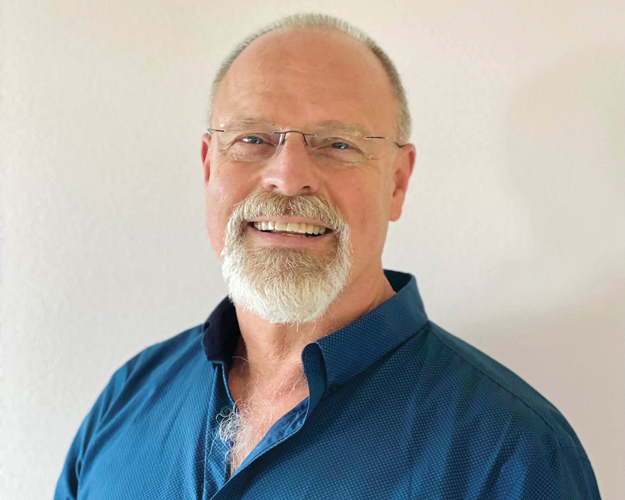
From the start, Treftz wanted to set his company apart from competitors by taking a conscientious, low-environmental-impact approach. His background was in construction and a stint as a technician at a large pest control firm, so he was well-equipped to spot where exclusion efforts could stop pests from entering structures. While that sounds like an ideal approach for a pest management professional (PMP) today, it was practically revolutionary 47 years ago.
“When PMPs were largely at loggerheads with environmentalists, Cascade Pest Control did the unthinkable and reached out to those in the ecological movement and looked for common ground,” Treftz explains. “We knew the public valued both effective pest management and the environment. What we also knew was that a good many people equated concerns over the natural environment with their own environmental health. The public wanted then — as they do now — reassurance that providers of pest management were conscientious of their health and safety in their homes and businesses. Caring for the general environment is an indicator of care and concern overall.”
Treftz was bolstered by swift, word-of-mouth success and growing recognition for this approach. In the years since, Cascade has been the recipient of the Washington State Ecological Commission Award, the Governor’s Environmental Award, and the U.S. Environmental Protection Agency’s (EPA) Region 10 Evergreen Award, making it one of the few structural pest control firms in the nation to receive such distinction from the EPA.
The business has grown from a one-man operation into a regional powerhouse of about 30 employees, serving Greater Seattle and Puget Sound in Washington and Greater Boise and Treasure Valley in Idaho, and their surrounding areas. Treftz says that today, with services focused on exclusion and prevention of ants, spiders and rodents, the secret sauce really is a steady focus on integrated pest management (IPM) and being upfront with customers about how it works.
“It has become clear that pest management must practice IPM and earn public trust at every step,” he explains. “Business benefits will follow.”
A pledge to protect
Treftz points out that Cascade’s markets in both states have unusual rodent pressure.
“The rodent populations are well-entrenched and continuously migrate throughout urban and suburban areas,” he adds. “Rural areas have constant pressure from native mouse populations.” In response, Cascade has developed a prevention program, focused on monitoring and perimeter defense, that has been a popular and effective service.
When the National Pest Management Association (NPMA) launched its Sustainability Pledge last November (Editor’s Note: visit NPMApestworld.org/your-business/sustainability for more information), Treftz was eager to be one of the first PMPs to sign it.
“The pledge makes perfect sense, given our long-standing environmental values and company legacy,” he says. “The NPMA Sustainability Pledge is also critical to our industry and to each company involved in signing it, both to care for resources and the environment, and to continually earn and maintain public trust.”
Empathy, education in equal parts
In 1994, Treftz went back to college to finish his degree in psychology. He then earned a master’s degree in 1999 in applied behavioral science in the counseling track, with a focus on systems theory and family counseling. The additional education has given him more insights and understanding where both customers and employees are coming from.
Still, he admits there have been many other lessons to be learned over the past 47 years — many from trial and error. His current team, led by Operations Director Kevin Peterson, Field Manager Charlie Neal and Office Manager Karin Torchia, are in place because they share his philosophy that gaining and maintaining customer confidence is the top priority.
“Obviously, intense learning of pest biology and control and applying IPM principles consistently also are essential,” he says, “But empathizing with people’s personal health concerns is critical. We are up front with our values and reputation, whether on our website or in leave-behind literature for our clients. Training staff on these values and attitudes starts day one, and is continually incorporated into our ongoing training and meetings.”
The hardest aspect over the years, Treftz says, has been learning to recognize what makes a candidate for hire the right fit for Cascade.
“When you plan to insist on excellence, you have to manage and monitor your crew carefully,” he advises. “Encouraging technicians to do their best and correcting them when they are in error, and also knowing when they’re just not going to make the grade, are all skills that make or break a company’s excellence. Fast-tracking this learning curve would have done us wonders.”
With the right people in place, fostering a positive customer experience is practically a walk in the park.
“We train our team to remember that customer priorities may evolve throughout the service experience,” Treft concludes. “When facing an active pest problem, their immediate focus often is simply getting it resolved. But once the issue is under control, they may have more questions about the products used and the precautions taken. Being transparent from the beginning and consistently demonstrating care for people, pets and the surrounding environment helps build confidence and lasting customer relationships.”