This species is native to China and adjacent East Asian areas, and was first identified and recorded in the U.S. in the 1930s. Formerly classified as Pachycondyla chinensis, it has more recently become a significant urban pest along the Mid-Atlantic coastal areas from Georgia to Virginia., and will no doubt spread within the southeastern U.S. in […]
ants

Ghost ants (Tapinoma melanocephalum)
Introduced into the U.S. from Africa or Asia, becoming an important household pest in areas of high humidity, including much...

Dark rover ants (Brachymyrmex patagonicus)
This species is native to Argentina, but has been introduced into the U.S. where it is now present in the...

Pest Control Mythbuster
Dr. Bill Robinson separates fact from fiction on widely held industry beliefs and practices.

Big-headed ants: Pheidole spp.
In the U.S., where there are approximately 74 ant species, big-headed ants are found mostly in the warm and dry...

Take your time to identify ants
Alan Bernard says to use your time and resources wisely to ask questions and find the source of the ant...

Tips to ensure successful ant bait use
Anna Berry, BCE, shares tips to get the most success out of using ant baits.

Clean up to prevent ants
The No. 1 step your clients should take is to frequently clean up food scraps and crumbs and put into...

Use enough bait to get rid of ants
Andy Linares, of Bug Off Pest Control, shares three tips to use bait correctly to get rid of ants.

Keep out pests in winter months
Mel Whitson, of Zoëcon, says in winter months, it’s vital to keep both indoor and outdoor spaces free from clutter,...

Treating for any colonies
Andrew Fisher, BCE, PHE, of Neogen, shares tips on how to treat ant colonies to prevent them from growing.

Steps to decide how to treat ants
Ant identification is critical for determining the protocol that will be used for management. Follow these steps: 1. Thorough inspection:...

Initial identification of ant species
Matt Remmen shares tips on what to have in your toolbox to treat different ant species, such as baits, sprays...

Taking a proactive approach against ants
Dr. Jamael Sandidge, BCE, of Nisus, says taking a proactive approach against ants can prevent headaches and callbacks later.
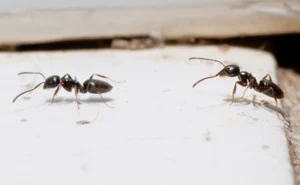
Ant, bait types defer from one account to another
Dr. Ryan Neff, of MGK, says it's hard to generalize about baiting since ant types can vary from one account...

Preparing for ants in the spring
Dr. Cisse Spragins suggests preparing your accounts for this spring increase by proactively applying weatherable granular bait around the perimeter.