Listen to this content
RECENT INNOVATIONS: Bed bugs are an infamous pest that have plagued humans for a very long time. This insect’s ability to readily switch hosts and find harborage in hard-to-reach places makes it a difficult foe. Not only are bed bugs tricky to find, but their increasing resistance to insecticides adds yet another challenging layer to the successful elimination of an infestation.
Resistant insects commonly have a heightened defense mechanism — cytochrome P450 enzymes — that attack insecticides. Piperonyl butoxide (PBO) binds to these detoxification enzymes, allowing the primary active ingredient in the insecticide to reach its target site and work more effectively.
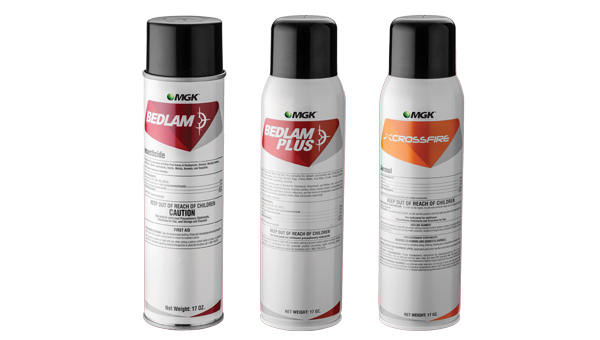
So, when dealing with resistant populations of insects, consider reaching for products containing a synergist, such as PBO and/or MGK-264. MGK’s bed bug products, including CrossFire Concentrate and Aerosol, Bedlam and Bedlam Plus, all have a synergist built into the product to combat metabolic resistance commonly seen in bed bugs.
PREDICTIONS: Bed bug treatments have historically been an involved, labor-intensive process. Many PMPs have approached bed bug treatments the same way, regardless of whether it’s an infestation of five or 500,000 bugs.
While full prep of an entire home for a low infestation often is effective, it’s not necessarily efficient or needed. Assessment-based pest management (APM) is a strategy that tailors treatment protocols to the assessed level of infestation and has been highly effective against German cockroaches (Blattella germanica). Over the next few years, we expect to see increased adaptation of APM against bed bugs.
Treatment methods should include using different chemistries and synergists to fight insecticide resistance, as well as nonchemical methods, such as heat, depending on the needs of a specific situation.