Listen to this content
Few callbacks generate more urgency than a stinging insect complaint. And for good reason — as a sting can land you in the emergency room if you have a sensitivity to insect venom.
Common stinging insect callbacks in the summer months occur because early-season nests that were started in late spring got missed during a scheduled service. Familiarizing yourself with the biology and behavior of common stinging insect pests in your region is a critical first step to making sure you know what signs to look for, critical areas to inspect and when to look. Knowing where these pests are likely to nest will help you avoid getting tunnel vision during spring services.
If you missed the initial spring inspection window, it’s not too late to fend off inevitable summer callbacks. August is still a great time to incorporate harborage surveys into every service call. This means checking under eaves, inside meter boxes and light fixtures, under deck railings and around dense landscape where bees and wasps often nest. For insects that construct subterranean nests, such as fire ants and yellowjackets, walk the property to look for activity at ground level. Incorporating a stinging insect inspection into your regular service visit will pay dividends if and when a nest is found before your client discovers the problem first.
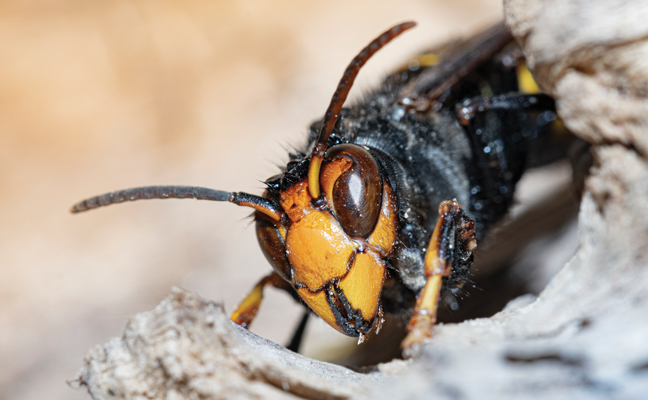
Even if you know which native species are in your area, stay current on any new invasive pests that may be making their way into your region. In the past decade, we’ve seen the northern giant hornet (Vespa mandarinia) and the yellow-legged hornet (V. velutina, pictured above) confirmed in various parts of the country. The Asian needle ant (Brachyponera chinensis), an invasive pest confirmed in the U.S. for decades, has recently expanded its range into several new states.
Stinging insect callbacks are predictable, seasonal and largely preventable. The best time to start preparing for stinging insect season may be late spring, but the second-best time to start preparing is right now.