
Listen to this content
Most mosquito breeding sites become predictable after you’ve worked in this business long enough. You learn which neighborhoods produce the most activity, which roadside stormwater catch basins stay productive after heavy rain, and which properties seem to generate callbacks every season.
Then you come across one that refuses to follow the rules.
Over the years, I’ve spoken with several district managers who noticed the same pattern: A small number of basins consistently produced larvae despite receiving the same product, application rate and treatment schedule as nearby sites.
At first, it looked like a treatment issue. But it was something far more interesting. Breeding sites do not stay the same after years of mosquito control. They evolve with environmental conditions, maintenance practices and repeated treatment, and that has important implications for every mosquito management program.
Site-specific conditions
Three years of larvicide trials in suburban Chicago, Ill., across dozens of catch basins found that more than a quarter of the catch basins weren’t receiving adequate protection from the standard single-dose treatment used everywhere else. The cause wasn’t the product itself — although it’s always best practice to rotate active ingredients to prevent adaptational resistance. Instead, it was site-specific conditions such as heavy debris load, high flow after storms, and sediment build-up that shielded larvae from the active ingredient.
In plain terms, a basin’s physical condition can quietly nullify a treatment that works everywhere else along the route.
That is a hard thing to catch from a truck window. A basin can look identical to the one next door and still behave completely differently once you factor in what is actually happening below the grate.
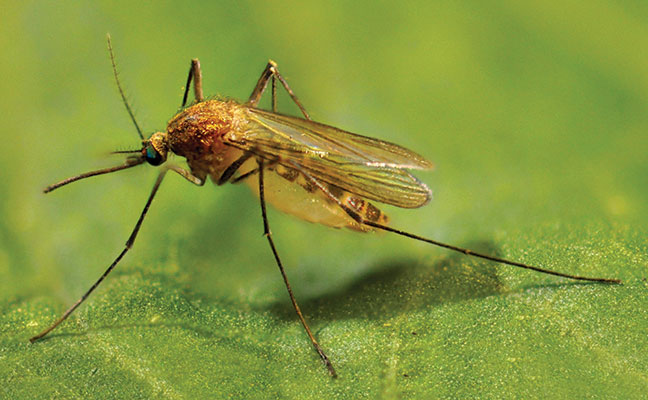
Even when treatments suppress larvae successfully, operational success isn’t always reflected in adult mosquito populations. A field trial in metropolitan Milwaukee, Wis., treated catch basins across multiple sites and confirmed that the larvicide reduced larval and pupal counts inside the basins, as expected. But when researchers tracked adult, host-seeking Culex spp. populations nearby, the connection between fewer larvae in the basin and fewer biting adults in the area wasn’t nearly as clean as the label would suggest.
A separate program in Connecticut found much the same thing. Larval treatment cut pupal abundance and host-seeking adults in the short term, but had no measurable effect on West Nile virus infection rates in the mosquitoes actually caught in traps.
Neither study argues against larval control, of course. But they do argue against assuming a treated basin equals a solved problem. Adult mosquitoes move; other breeding sites pick up the slack, and disease risk depends on more variables than what’s sitting in one drain.
A smarter approach
Four operational best practices emerge from these findings:
- Keep a season-over-season record for each catch basin, not just a district-wide treatment log. Repeat failures at the same site are a signal worth acting on, not noise to average out.
- Rotate product by mode of action. Two products that hit mosquitoes the same biological way aren’t really a rotation.
- Pair larval treatment with some form of adult surveillance wherever possible. Even something as simple as a gravid trap nearby can help determine whether the larvicide is actually translating into fewer bites.
- Treat “resistant” basins as a physical problem first. Clean out debris and improve flow before assuming the product has failed.
The longer I’ve worked in mosquito management, the more I’ve learned that breeding sites change over time. Research is confirming what many professionals have seen in the field for years. Successful long-term control depends just as much on understanding the site as it does on choosing the right approach.