Listen to this content
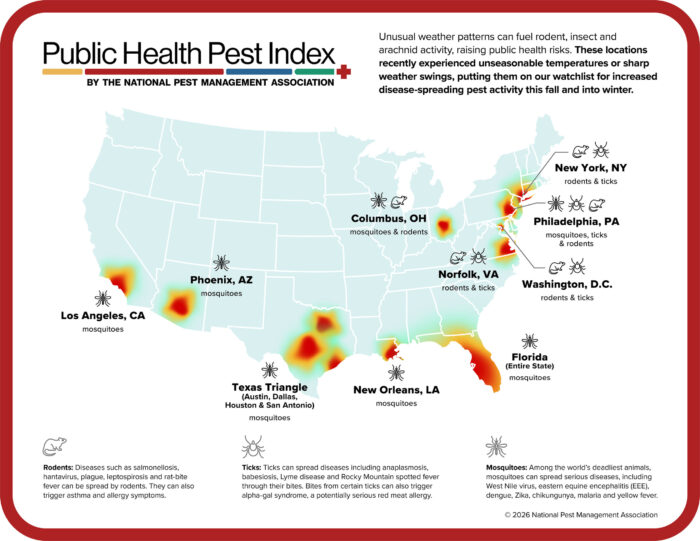
The National Pest Management Association (NPMA) released its fall and winter Public Health Pest Index. Twice a year, NPMA identifies cities in the United States that are at a heightened risk for disease-spreading pest activity. This season’s index names Florida and Texas as special areas to watch, with several cities in each state showing high pest potential.
According to the Fairfax, Va.-based association’s official news release, unusual weather patterns can fuel rodent, insect and arachnid activity. Along with additional hot spots, fluctuating temperatures, rainfall and seasonal pest activity could keep residents on alert.
“This season’s report comes as heavy rainfall and flooding across the Southwest can create new mosquito breeding sites, while mild weather keeps other disease-carrying pests active nationwide,” Dr. Jim Fredericks, senior vice president of public affairs at NPMA, said in the news release. “The most effective prevention starts before pests become a problem.”
NPMA’s list of cities named to the Public Health Index includes:
- Columbus, Ohio: Warmer-than-average temperatures could delay the seasonal slowdown in mosquito activity. Once colder weather arrives, residents may face increased rodent activity as the pests move inside for food and shelter.
- Los Angeles, Calif.: Mosquito season may stretch beyond its usual window if mild temperatures persist. West Nile virus is already a concern in the region, so residents should continue taking precautions.
- New Orleans, La.: An extended mosquito season is possible, as forecast warm temperatures and heavy rainfall could create additional breeding opportunities.
- New York, N.Y.: A milder fall and winter could allow ticks to continue seeking hosts, making tick checks important after spending time outdoors. City dwellers may also encounter more rodents moving into buildings as temperatures cool.
- Norfolk, Va.: Both ticks and rodents could remain active later into the season if temperatures stay mild and rainfall increases as predicted.
- Philadelphia, Pa.: Mild weather may keep mosquitoes and ticks active outdoors for longer. Once temperatures cool, residents could then face rodents moving indoors.
- Phoenix, Ariz.: Above-average rainfall and temperatures could create mosquito breeding sites wherever water collects. West Nile virus is already a concern in Arizona, so residents should keep removing standing water to protect themselves against bites.
- Washington, D.C.: Tick and rodent activity could linger into winter thanks to forecast mild temperatures and above-average precipitation.
Additionally, the statewide alerts for Florida and Texas include:
- Florida: Mosquito activity may persist as conditions remain favorable. The state has reported one of its largest dengue outbreaks, so residents should continue protecting against mosquito bites by eliminating standing water around their homes.
- Texas Triangle (Austin, Dallas, Houston and San Antonio): Residents may notice mosquitoes sticking around longer than expected, as temperatures above seasonal norms could support continued activity into winter.
About the NPMA
The National Pest Management Association is a non-profit organization with more than 4,000 members. It was established in 1933 to support the pest management industry’s commitment to the protection of public health, food and property from the diseases and dangers of pests. The association has had many notable leaders over the years, including Pest Management Professional Hall of Famers Bill Buettner (Class of 1998), Dr. Ralph Heal (Class of 2003), Dr. Phil Spear (Class of 2004) and Bob Rosenberg (Class of 2013), to name just a few.
You can reach Dr. Fredericks, BCE, executive director of the Professional Pest Management Alliance (PPMA), at jfredericks@pestworld.org