Listen to this content
Researchers at New York’s Stony Brook University have confirmed a case of the rare Bourbon virus in Long Island. Their paper about the findings was published in the July issue of the American Journal of Tropical Medicine and Hygiene.
Per the university’s new release, the Bourbon virus, transmitted by lone star ticks, was discovered in 2014 and named for Bourbon County, Kan., the area where the virus was first identified. “There are no vaccines to prevent or medicine to treat the illness, which remains rare but mostly in regions in the central part of the U.S. Symptoms of the virus include fever, fatigue, rash, headache, body aches and nausea.”
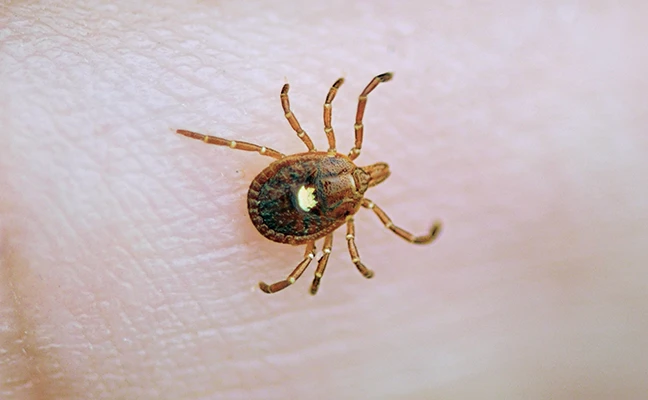
This is just one of many maladies attributable to lone star ticks, including Heartland virus, Southern Tick-Associated Rash Illness (STARI) and Rocky Mountain spotted fever (RMSF). As Mark “Shep” Sheperdigian, BCE, noted in a 2022 column in Pest Management Professional:
The lone star tick (Amblyomma americanum) is a small arthropod that is found predominantly in the south central and southeastern United States. In recent years, it has been moving north into the Great Lakes region. It is called the turkey tick in some areas for its association with wild turkeys.
It is a vector of pathogens that cause tularemia, human ehrlichiosis and several other diseases. But that’s not the worst of it: The bite of the lone star tick has come to be associated with a condition known as alpha-gal syndrome or (cue the ominous music) red meat allergy. Can you believe it? Some people bitten by this tick develop a condition that causes them to react horribly when they eat red meat or dairy products. The symptoms are just like anaphylaxis; they can be severe and even life-threatening. Currently, there is no known cure, and victims must limit themselves to fish, poultry and vegetables. Vegans are unaffected.
The symptoms are brought on by consuming foods that contain a carbohydrate that is called alpha-gal because no one wants to say galactose-α-1,3-galactose. It is found in the cell membranes of all the mammals we typically eat. It isn’t found in humans, apes and monkeys, but that doesn’t help us at all. To make matters worse, it is also found in dairy products.
To be clear, most people bitten by the lone star tick don’t get alpha-gal syndrome, but knowing the possibility exists should be enough to get everyone to take precautions. It also should be noted that some people have lost the syndrome after some years.
The new study’s lead author, Dr. Luis Marcos, and his colleagues identified the first tick-borne Bourbon virus case in April: “The finding was based on the published study of 107 individuals presenting with fever and other tick-borne illness symptoms between 2019 and 2024. Blood samples were collected from patients and sent to the NYS Department of Health. Two cases had neutralizing antibodies for the Bourbon virus. One of these patients had a four-fold rise in antibody titers of the Bourbon virus, which, according to the researchers, indicates an acute or recent infection of this virus.”
Dr. Marcos said in the news release that because Bourbon virus is so rare, and that early symptoms — fatigue and severe headaches — can be very similar to Lyme disease, it’s easy to be misdiagnosed. There are no commercial tests for the virus currently available, but it can be confirmed through lab analysis.
The Centers for Disease Control and Prevention (CDC) note the following symptoms to be aware of for Bourbon virus:
- Fever
- Fatigue
- Rash
- Headache
- Other body aches
- Nausea and vomiting
Other signs can include:
- Lower-than-normal counts of white blood cells, which help fight infections
- Lower-than-normal counts of platelets, which help prevent bleeding
Read more about the Long Island’s patient’s firsthand account as told to CBS News. On July 1, per an article in The Southampton Press, U.S. Sen. Chuck Schumer (D-NY) announced a “request for $273.5 million in funding for research of ticks and tickborne diseases in the 2027 federal budget. The initiative would add $90 million more than what was allocated in the 2026 fiscal year toward these efforts. According to a press release from Schumer’s office, new data shows that Suffolk County recorded 3,152 Lyme disease cases in 2024 — the most of any county in the state, while the region from Manhattan to Montauk saw more than 6,600 cases in a single year.”