Listen to this content
Control ticks with T.I.C.K.
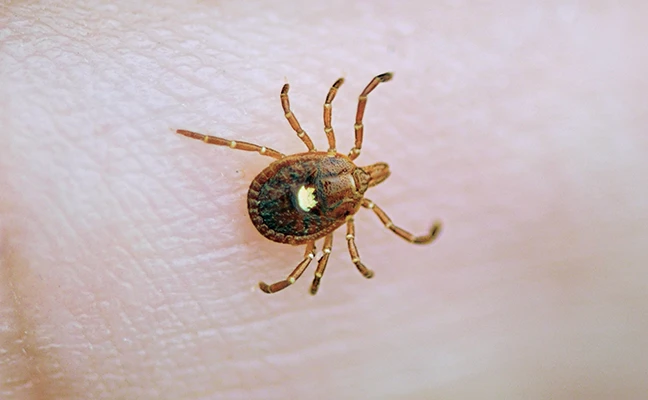
As members of the class Arachnida, ticks are small, blood-feeding arthropods that inhabit a wide range of environments globally. Of the 867 known species, approximately 10 percent are capable of transmitting serious pathogens to both animals and humans, including Lyme disease, Rocky Mountain spotted fever and ehrlichiosis.
To provide a structured, integrated strategy for effective control, we utilize the T.I.C.K. framework: Treating, Isolating, Controlling and Keeping tabs.
Understanding tick biology
Identification is the first step in any program, as species differ significantly in their morphology and life cycle patterns:
- One-host ticks: Complete their entire life cycle on a single host (e.g., cattle fever ticks).
- Three-host ticks: Require different hosts for each life stage — larva, nymph and adult (e.g., Ixodes, Dermacentor and Amblyomma species).
- Multi-host species: Feed on multiple hosts throughout their development (e.g., swallow ticks).
T | Treating tick habitats
Effective treatment requires a combination of three things:
1 Correct equipment. Use appropriate sprayers (batteryor fuel-powered) and powder applicators suited to the treatment area’s size and vegetation density. Dense foliage or leaf litter conditions call for high-volume delivery to ensure thorough coverage.
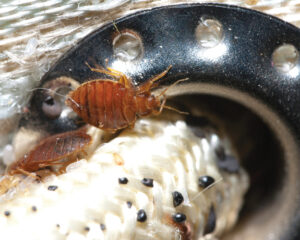
2 Precise applications. For indoor infestations, such as those caused by brown dog ticks, apply products in cracks, crevices and pet resting areas to limit unnecessary exposure.
Outdoors, focus on:
▶ High-risk zones. These include perimeters, forest edges and lawn-woodland transitions where ticks cluster.
▶ Transitional boundaries. Treat areas where manicured lawns meet brush or tall grasses.
▶ Dense vegetation. Increase spray volume to penetrate thick vegetation and ground litter.
3 Situational treatment timing. Schedule treatments based on the tick species’ life stage activity. For example, treat black-legged ticks in late fall or early spring when adults are active, and then again mid-spring for nymphs and larvae in leaf litter.
By contrast, for American dog ticks, apply mid-spring to early fall when all stages are active, especially near trails. Repeat applications every three to four weeks during peak activity periods to sustain control.
Supplemental biological control
Ostfeld et al.7 suggested that ecological approaches — including habitat manipulation and the use of biological agents — can reduce tick populations and disrupt disease transmission cycles. Entomopathogenic fungi, such as the green muscardine fungus (Metarhizium anisopliae), provide an effective supplement to chemical control. These fungi attach to and invade the tick’s body, eventually causing death.
Green muscardine fungus and white fungus (Beauveria bassiana) are particularly promising when applied using optimized strains and methods. Their effectiveness, however, depends on favorable environmental conditions like moderate humidity and low ultraviolet light (UV) exposure, so application timing is critical. Rajput et al.8 demonstrated the efficacy of nine fungal species against various ticks.
I | Isolating and excluding
While most tick species don’t thrive indoors, a brown dog tick can complete its life cycle in homes, especially near pets. To reduce indoor risks:
▶ Seal entry points. Close gaps around doors, windows, foundations and utility penetrations.
▶ Implement routine inspections. Regularly assess the perimeter, especially near vegetation or areas frequented by pets.
▶ Make seasonal adjustments. Adapt exclusion strategies based on landscaping and building structure changes.
Outdoors, ensure sheds, kennels and other structures are dry and well-ventilated to reduce tickfriendly harborage conditions.
C | Controlling environmental factors
Environmental management is key to long-term tick suppression. Educate clients on these habitat modifications:
▶ Vegetation management. Keep grass trimmed, remove leaf litter and trim overgrown brush and vegetation near wood lines.
▶ Moisture reduction. Improve drainage and eliminate shaded or damp areas. Install barriers to limit wildlife movement.
▶ Land use planning. Design paths that avoid tick-prone zones and break up dense vegetation to interrupt tick habitats.
▶ Outdoor sanitation. Keep patios and decks free of organic debris and dispose of yard waste promptly.
▶ Wildlife exclusion. Use fencing and repellents to deter deer, rodents and other tick-hosting pests.
K | Keeping tabs on activity
Long-term success depends on continual monitoring and documentation, such as:
▶ Treatment logs. Record all applications, including products, rates and timing.
▶ Host monitoring. Note pet and wildlife activity that could introduce ticks.
▶ Environmental tracking. Document vegetation, moisture and weather conditions.
▶ Effectiveness evaluation. Use monitoring data to refine control tactics over time.
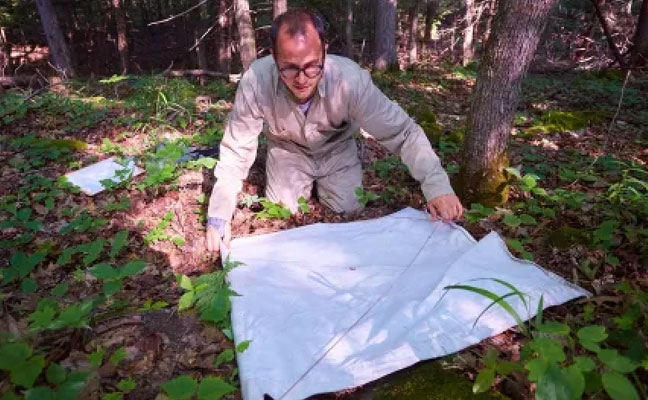
One of the most effective ways to evaluate a program is through tick drag sampling. By dragging a cloth or flannel sheet across the ground, technicians can capture and monitor nymph and larval populations, allowing for the refinement of control tactics over time. By following the T.I.C.K. framework, PMPs can move beyond reactive spraying toward a proactive, science-based management system.
- Jongejan, F., and Uilenberg, G. (2004).
“The global importance of ticks.” Parasitology,
129(S1), S3–S14. - Shapiro, E.D. (2014). “Clinical practice.
Lyme disease.” The New England Journal of
Medicine, 370(18), 1724–1731. - Nuñez, J.L., Muñoz-Cobeñas, M.E., and
Horacio, L. M. (1985). Boophilus microplus:
The Common Cattle Tick. Springer-Verlag, Berlin,
Germany. - Griffiths, H.J. (1978). A Handbook of
Veterinary Parasitology: Domestic Animals of
North America (pp. 161–162). University of
Minnesota Press. - Rajput, M., Sajid, M.S., Rajput, N.A., George,
D.R., Usman, M., Zeeshan, M., Iqbal, O.,
Bhutto, B., Atiq, M., Rizwan, H. M., et al.
(2024). “Entomopathogenic fungi as alternatives
to chemical acaricides: Challenges, opportunities
and prospects for sustainable tick control.”
Insects, 15, 1017.