Listen to this content
Rockwell Labs
By Nick Godfroid, BCE, Technical Specialist

Unwanted wildlife on a property creates more than just nuisance issues. Birds and mammals such as opossums, squirrels, armadillos and feral cats can introduce parasitic pests, including ticks, fleas and chiggers. These pests often arrive on wild animals carrying eggs or feeding populations, allowing them to establish populations in new areas.
Simply removing the wildlife may not solve the entire problem. Once their original host is gone, established parasites may seek alternative hosts, increasing the risk of bites to pets and people.
When treating properties with active wildlife pressure, pest management professionals (PMPs) should consider recommending secondary treatments. Botanical-based sprays and granular products can effectively kill or repel parasitic pests in common harborage areas such as low vegetation, ground cover and leaf litter. Only addressing wildlife will overlook the ecosystem of pests that often accompanies it. By targeting both the animal and the associated pests, you can provide comprehensive protection and better long-term results for your customers.
Wildlife Control Supplies
By Gregg Schumaker, Director of Business and Product Development

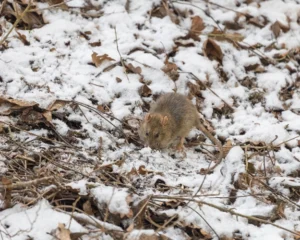
Winter damage by meadow voles (Microtus pennsylvanicus) and other vole species often is overlooked because much of the activity takes place beneath snow cover. Meadow voles construct surface and underground runways and remain active throughout the winter, where their movement beneath the snow is known as subnivean behavior. They can cause extensive damage to lawns and may feed on the bark of fruit trees and woody ornamentals.
For PMPs, the key is to get ahead of the problem. Place bait stations before winter weather in areas of low-growing vegetation. Maintain these stations throughout the season. Placement is critical, especially around properties with a history of vole damage. Trapping is another option, with mouse-sized traps placed directly in active runways and protected inside a station or cover.
Most winter vole programs will require an initial setup followed by three or four service visits. Because properties with previous damage often experience problems again, vole control can become a valuable recurring winter service.
National Wildlife Control Operators Association
By Charles Holt, CWCP, MNI, Events Coordinator/Vendors Relations Specialist

CNI, MNI
Here are my Top 5 considerations for controlling raccoons (Procyon lotor). I’ve learned all this and more over the years from my own experience, as well as training from the National Wildlife Control Operators Association (NWCOA), annual Wildlife Expos and fellow NWCOA members:
1. Perform extra-strong repairs. If you think a raccoon repair is “good enough,” rethink it and do a little more. Raccoons are strong and persistent, and that extra effort can prevent a callback.
2. Keep an eye on the calendar. As raccoon babies, or kits, reach a certain age, eviction fluid can become less effective, for example. This is why understanding what’s happening inside the structure is important.
3. Bait traps to appeal to multiple senses. Sight, taste and smell used together can outperform relying on just one. Give the raccoon a few different reasons to investigate.
4. Choose strategies wisely. For example, a raccoon refusing to exit through a positive trap may create another exit, causing additional damage.
5. Invest in quality traps. While they can be a large investment, high-quality traps can perform year after year, while cheaper traps may lead to escapes, damaged components and loss of function in the field.
▶ Did you know?
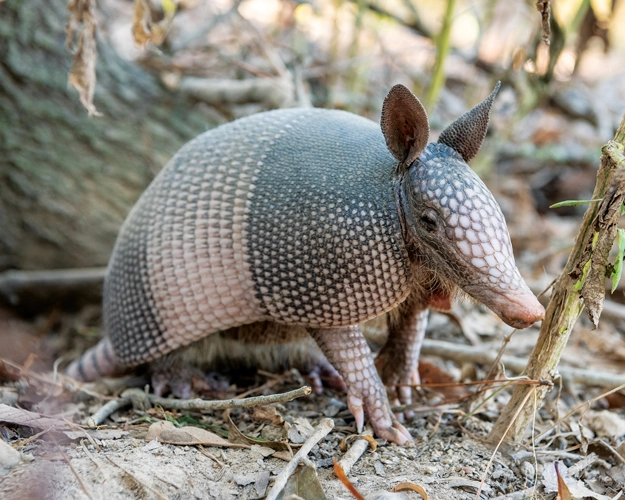
The Mexican long-nosed armadillo (Dasypus mexicanus) is the only known animal reservoir in North America of Mycobacterium leprae, the bacterium that causes Hansen’s disease, or leprosy.
SOURCE: CENTERS FOR DISEASE CONTROL & PREVENTION