Listen to this content
Editor’s Note: This article was originally posted June 8, and has been updated on June 27 to reflect additional cases.
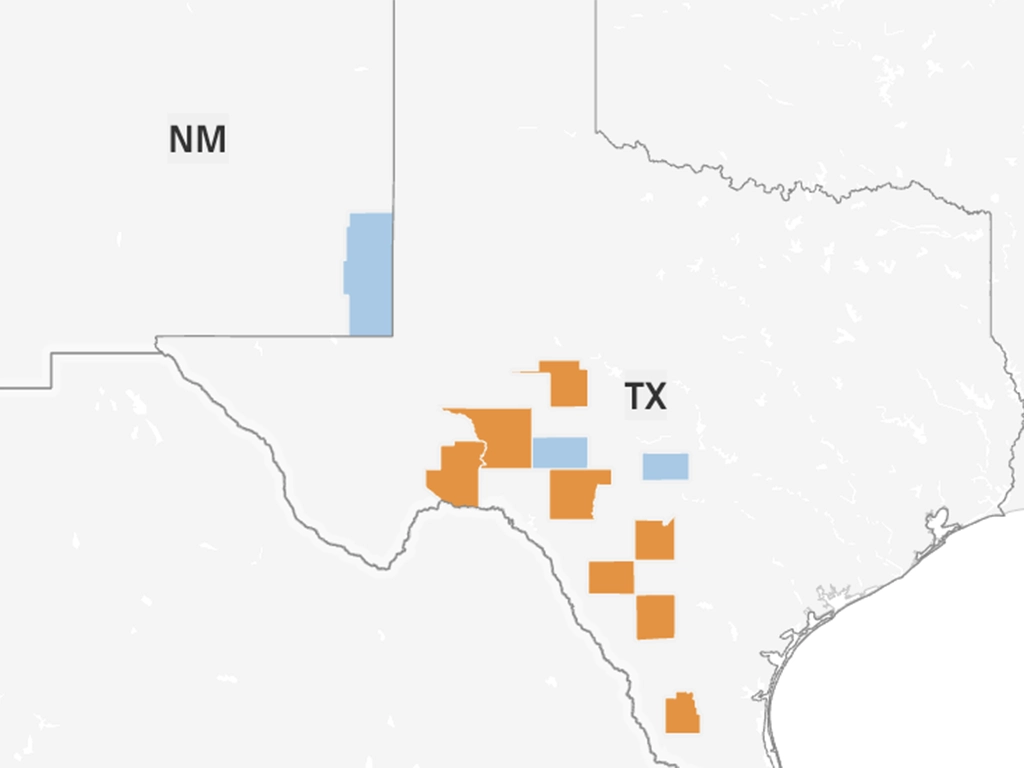
The U.S. Department of Agriculture’s (USDA) Animal and Plant Health Inspection Service (APHIS) has confirmed 27 total cases of New World screwworm (Cochliomyia hominivorax, also known as NWS) in the United States across two states, Texas and New Mexico.
Bolded counties are considered active cases, unbolded are inactive. Zavala and La Salle Counties contain multiple active cases.
- Cattle (Texas):
- Crockett County
- Edwards County
- Jim Hogg County
- La Salle County
- Medina County
- Sutton County
- Tom Green County
- Terrell County
- Zavala County
- Dog:
- Lea County, New Mexico
- Goat (Texas)
- Gillespie County
- Edwards County
- Terrell County
- Sheep:
- Sutton County
- Crockett County
At press time, the dog is believed to have recently been in Mexico. In the U.S., this species had been considered to be eradicated since 1966, although there was a small, contained outbreak in Florida in 2017.
“Over the past week, USDA has identified and expeditiously confronted four confirmed detections of New World screwworm. While we address these instances that require immediate attention, and continue to sample suspected cases, we are simultaneously working to eradicate the pest entirely,” Dudley Hoskins, Under Secretary for Marketing and Regulatory Programs, said in a news release. “We need the partnership of animal owners across the region – please stay vigilant, check your animals closely, and report anything that looks suspicious. Together, we can protect our livestock, our communities, and the health of animals nationwide.”
Information on this flesh-eating fly
Per the USDA news release:
NWS is a serious pest that threatens livestock, pets, wildlife, and, in rare cases, people. The larvae burrow into the living tissue of animals, causing severe wounds, animal suffering, and significant economic losses.
The USDA and the Texas Animal Health Commission (TAHC) continue to lead an aggressive unified response, with a total of 75 people actively responding on the ground and hundreds of additional people around the country providing laboratory diagnostics, logistics, treatment distribution, air operations, outreach, operational planning, and resource support for the response. APHIS and TAHC will continue to surge additional trained personnel as needed to ensure an effective response.
For each new case, USDA and TAHC implement actions outlined in the NWS Response Playbook, including:
- Establishing and maintaining a 20-kilometer infested zone with quarantines, movement controls, and heightened surveillance around confirmed detections
- Increasing trapping along the border and outside the dispersal zone
- Conducting surveillance and management strategies in wildlife
- Implementing targeted outreach to local producers, veterinarians, and communities
In addition, the USDA continues to release sterile flies over and just outside of the infested areas. To ensure sterile fly release operations can be deployed to affected areas in Texas and in northern Mexico near the border as quickly and efficiently as possible, USDA has activated the sterile fly dispersal facility at Moore Air Base in Edinburg, Texas. Sterile pupae arrived at the facility on Friday, June 5, and aerial dispersal flights originating from the base will begin tomorrow, June 9.
Because it is important to continue ongoing surveillance efforts while releasing sterile insects, it is possible that sterile NWS flies could be caught and/or reported. To ensure officials can tell the difference between sterile and wild NWS flies, USDA dyes the sterile pupae, and the dye transfers to the sterile flies when they hatch. The fluorescent green or orange dye glows under ultraviolet (UV) light and may also be visible to the naked eye. If a sterile fly is captured in a trap, this dye allows animal health officials to quickly rule the fly out as a threat.
What local PMPs can do
Pest management professionals (PMPs) in the area can tell their customers to check animals for:
- Draining or enlarging wounds
- Maggots or egg masses
- Signs of discomfort
- Lesions in body openings (nose, ears, genitalia, umbilical area)
Per the USDA, anyone who suspects a screwworm infestation should immediately contact their veterinarian, state animal health official, or USDA. USDA has established a contact page at APHIS.usda.gov/animals/animal-health/livestock-and-poultry-disease/stop-screwworm/report-suspected-cases-screwworm to ensure everyone can easily find the correct contact information for these groups. Learn more at Screwworm.gov.