Listen to this content
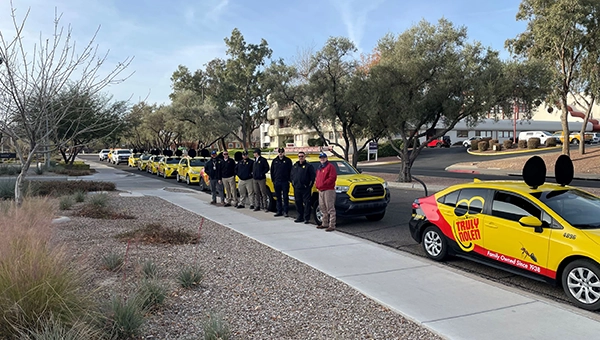
The Iran war is significantly impacting the energy industry, and trucking companies in particular are experiencing an unprecedented surge in fuel costs. For pest control operators (PCOs), what was once a manageable and predictable expense is quickly becoming volatile and difficult to control. In fact, since fueling up a mouse isn’t free, our mouse car and mouse truck fleet is also experiencing the impact of the energy expense spike.
According to the American Automobile Association, the national average price of gasoline has increased by roughly 30 percent, while diesel fuel has risen by as much as 40 percent this year alone. This kind of rapid escalation puts immediate pressure on margins, especially for businesses that rely heavily on fleet operations.
Fueling surcharges
The impact extends well beyond a PCO’s own vehicles. Fuel inflation is working its way through the entire supply chain, affecting everything from mail delivery to Amazon shipments and vendor deliveries. Every touchpoint in the logistics chain is absorbing higher transportation costs, and those increases are inevitably passed along. Many large organizations have already adjusted their pricing structures in response. Both FedEx and UPS have implemented fuel surcharges at levels not previously seen, signaling a broader shift in how companies are managing transportation-driven cost volatility.
Historical response to fuel costs
From a historical perspective, this is not unfamiliar territory. The 1973 oil crisis led to dramatic increases in fuel prices and widespread disruption across the U.S. economy. The Gulf War, 18 years later, produced a sharp but short-lived spike that closely resembles current conditions, while the 2008 energy surge demonstrated how quickly fuel prices can rise even outside of geopolitical conflict. The key difference today is not just the spike itself, but the frequency and persistence of these disruptions, which are making fuel a consistently unstable cost factor rather than a cyclical one.
Strategic pricing vs. visible fuel surcharges

In response, many of the top operators in the PCO industry are not defaulting to visible fuel surcharges but instead implementing strategic price increases. This approach allows businesses to protect margins without introducing the kind of line-item fees that often create friction with customers. Navigating the balance between rising operational costs and customer expectations is a challenge, but successful companies are addressing it through clear communication and disciplined pricing strategies. Customers are generally more receptive to thoughtful, transparent price adjustments than to unexpected surcharges, making consistency and clarity essential to maintaining trust.
Relying on route efficiency
At the same time, operators are taking a broader look at their cost structures. Route efficiency has become more critical than ever, as even small improvements in density and drive time can materially reduce fuel consumption across a fleet. Companies are increasingly evaluating how routes are built and maintained, ensuring they evolve alongside changes in growth and retention. In addition, vehicle-use policies are coming under greater scrutiny. While take-home vehicles have long been a valued benefit for employees, they also introduce higher fuel usage, increased wear and tear, and additional liability. With fuel costs rising disproportionately, many businesses are reassessing whether these policies remain economically viable in their current form.
A time of financial discipline
Beyond operational adjustments, there is also a renewed focus on financial discipline. Many PCOs are identifying areas where spending can be delayed or reduced without impacting core service delivery. This may include postponing non-essential investments or reevaluating discretionary expenses, thereby allowing businesses to preserve cash flow while navigating ongoing uncertainty. The goal is not to cut indiscriminately, but to prioritize expenditures that directly support growth and profitability. Adding hybrid vehicles to a fleet, as our company and several others have already done before this latest energy expense spike, is another area where PCOs can determine how much savings these vehicles can bring them per year versus a normal fuel-powered fleet vehicle.
Ultimately, fuel volatility is no longer a temporary disruption but an ongoing reality that requires active management. Pest control operators who respond proactively — through strategic pricing, operational efficiency, and disciplined cost control — will be better positioned to protect their margins and sustain growth. In an industry built on recurring service and route density, even incremental improvements can have a significant financial impact. Those who adapt early will not only weather the current environment but also emerge stronger and more resilient as conditions stabilize.