Listen to this content
The Centers for Disease Control and Prevention (CDC) has confirmed the first human case of New World screwworm (Cochliomyia hominivorax, or NWS) myiasis in the United States since its mid-20th-century eradication. The case involved a Maryland resident who had recently traveled to El Salvador. While the patient has made a full recovery, the incident highlights a growing biological threat as the species moves closer to the U.S. border.
Key takeaways
- Larval pathology: NWS is an infection where larvae feed on the living tissue of warm-blooded hosts, a condition that can be fatal if left untreated.
- Migration patterns: Since 2023, the species has been reestablished north of the Panama Canal, with over 6,500 cases reported in 2024.
- Technological defense: Eradication efforts rely on the “sterile insect technique,” surveillance, and specific attractants like Swormlure-2.
The biology of an infection
The New World screwworm is a member of the Calliphorid family and represents a significant threat to livestock, wildlife, and public health. Unlike scavenger flies, NWS deposits eggs into the living tissue of fresh wounds. The larvae then feed on the host’s flesh. According to the Texas A&M AgriLife Extension Service, this process causes severe wounds and is often lethal to the host animal if not medically addressed.
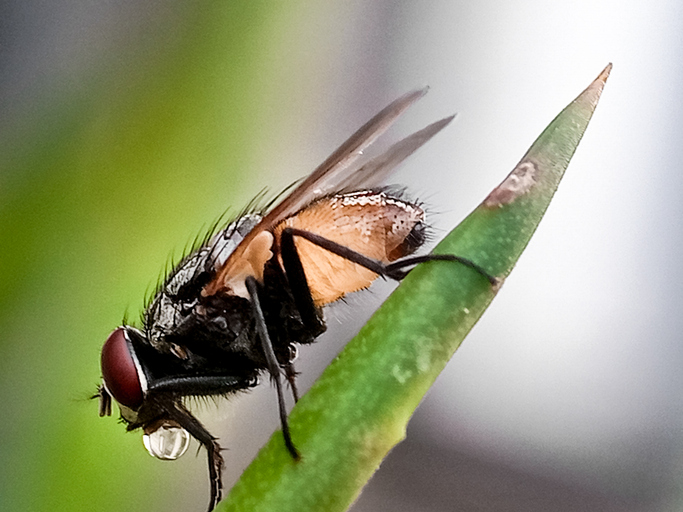
Identification: Distinguishing NWS from secondary screwworm
Accurate field identification is critical for monitoring. The Texas A&M AgriLife Extension Service identifies adult NWS as metallic blue blow flies characterized by:
- Large orange eyes.
- Three distinct stripes running down the thorax just behind the head.
These flies closely resemble the secondary screwworm (C. macellaria), which is also a metallic blue fly with three stripes. However, a key behavioral difference exists: adult secondary screwworms do not deposit eggs on living animals, and their larvae do not infest living tissue.
Historical success and modern vigilance
The U.S. eradicated NWS in the 1960s, with a brief, isolated outbreak in the 1970s eliminated through a coordinated response. This strategy included the release of sterile flies, the use of the insecticide dichlorvos, and the deployment of the Swormlure-2 attractant.
Currently, Texas Agriculture Commissioner Sid Miller is working with the USDA to protect the southern United States from a potential re-infestation. “This is a nationwide crisis with potential massive implications for American agriculture,” Miller stated, noting the possibility of billions of dollars in economic losses.
Monitoring the northern progression
As of May 2025, NWS has moved as far north as Veracruz, Mexico. While the fly has not yet officially entered the United States, the reestablishment of the species north of the Panama Canal has prompted intensified surveillance and livestock inspections. Research and proactive blocking strategies remain the primary defense against the devastating effects of this Calliphorid species on pets, people, and the wildlife industry.
More from the January 2026 Edition
Check out more pieces from the latest edition: PMP January 2026 Edition: Reading, Writing, Rodents?