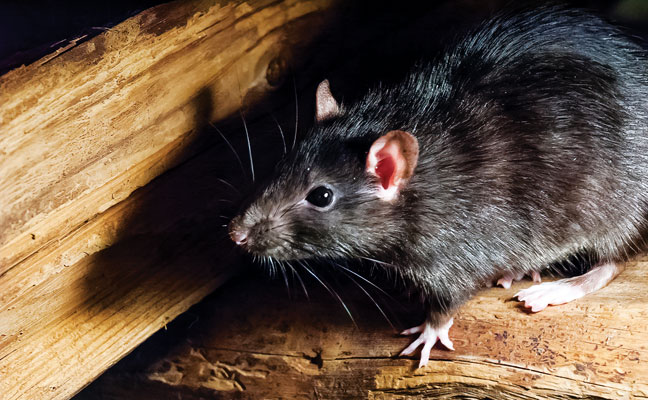
A recent news report by the New York Post highlighted a confirmed leptospirosis outbreak tied to rats in a San Francisco Bay Area encampment, drawing attention to the growing overlap between rodent control and public health.
Key takeaways
- Leptospirosis, a dangerous bacterial disease, has been detected among rats and dogs near a homeless encampment in Berkeley, Calif.
- Public health officials have issued a health alert and established a “red zone” to reduce exposure risks.
Berkeley health officials have identified an outbreak of leptospirosis, a potentially severe bacterial disease, among rats and at least two dogs near a homeless encampment in the Harrison Street area of northwest Berkeley.
Leptospirosis, caused by Leptospira bacteria, is typically spread through rodent urine contaminating soil and standing water. While human cases are rare, the disease can lead to serious illness involving kidney and liver damage or meningitis if left untreated. The bacteria thrive in places lacking basic services like indoor plumbing, running water or refrigerated food storage, making encampments prime breeding grounds for an outbreak.
In response, the city designated a “red zone” for surrounding areas and strongly urged residents of the encampment to relocate at least one-third of a mile away to allow for cleanup, rat eradication and public-health interventions.
Tracing leptospira bacteria
In a recent study, scientists from Tufts University, along with researchers from Northern Arizona University, the United States Department of Agriculture (USDA), and the Centers for Disease Control and Prevention (CDC), worked together to track the spread of leptospirosis in Boston, Mass.
From 2016 to 2022, researchers worked with Boston’s Inspectional Services Department to trap and test rats from 17 different sites.
Overall, the study tested DNA from 328 rats, 59 of which tested positive for leptospira bacteria. By combining genetic sequencing with information on rat migration, the team was able to see how leptospirosis travels through the city.
The team of researchers discovered that rats in Boston were beginning to travel further, more often, due to factors such as construction, habitat disruption or environmental changes. This leads to the rats encountering genetically different groups, enhancing the spread of bacteria.
What this means for you
Rats are a core pest category for most pest management professionals (PMPs), but leptospirosis adds a new layer to rat issues. Clients increasingly expect PMPs to speak confidently about both pest biology and the public-health implications of infestations, not just placement of traps or baits.
Conditions associated with encampments include poor sanitation, standing water and unmanaged rodent harborage, some of the same environmental factors that make rat control challenging in many urban and semi-urban service zones.
This situation also underscores the importance of integrated pest management (IPM) approaches: sanitation recommendations, exclusion practices and targeted rodent mitigation strategies, plus effective communication about risk reduction.
Practical next steps
- Educate your technicians on leptospirosis, how it spreads and what environmental cues to look for.
- Reinforce rodent control protocols with an emphasis on sanitation, structural exclusion and moisture management.
- Support customer communication by providing clear, factual guidance on risks and what steps clients can take.
About the Author

RJ Simon is the digital media specialist for PMP magazine. He can be reached at rsimon@northcoastmedia.net or (216) 675-6001.

Leave A Comment