Wouldn’t it be great if every wildlife control operator (WCO) and pest management professional (PMP) had the funds to buy the biggest and best equipment to jump into metal exclusion work? Unfortunately, that isn’t the case for most of us.
The good news is that low-cost techniques and equipment exist that can help you pestproof in metal to eliminate entry points, offer your clients a warranty on the repairs and increase revenue. This revenue can then be invested in breaks, training and more to really skyrocket your earnings.
Key takeaways for WCOs & PMPs
- Invest in quality brands: For core equipment like snips and drivers, buy the best you can afford from quality brands (like Malco, Wiss, DeWalt or Milwaukee) for better battery life, clean cuts and lasting sharpness.
- Hand seamers are essential: Hand seamers are a must-have tool for bending, folding, and flattening sheet metal edges and offer a break-like bending capability without the risk of a brake.
- Practice off-site: Before working on a client’s property, practice cutting and bending metal at your office or home to build skill and confidence.
- Focus on the final look: Step back and critically assess your exclusion work — if you wouldn’t have it on your own house, start over or make it better.
Core investment: Snips and drivers
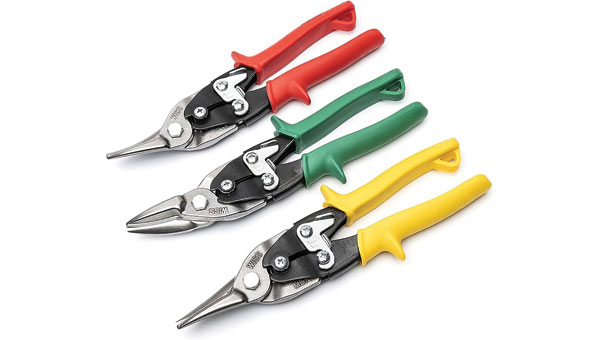
When building your toolkit, start with the best metal-cutting tools you currently can afford. It has been my experience that quality brands like Malco and Wiss are not that much more than lesser-quality brands. Aviation snips and other metal-cutting tools are going to get lots of use.
You can save a few bucks with lesser-quality snips, but clean cuts, less hand fatigue, and lasting sharpness more than make up for the additional dollars.
You should also buy the best drill and impact driver you can afford. In my experience, DeWalt and Milwaukee are two solid brands. The low-cost brands often don’t have a long battery life, don’t fit as well in hand, and present other issues.
The must-have tool: Hand seamers
Hand seamers are another must-have tool for metal exclusion. I prefer the Malco brand because, with their forged steel jaws, they are the premier choice for bending, folding, flattening, and straightening sheet metal edges.
Malco metal-bending tools, like the 12-inch version (Model 12F), have different throat depths and allow for break-like bending without the risk of a break. This tool is ideal for HVAC applications such as folds for drive cleats and big deep folds for joist panning, plenums, register boots, and more. The 24-inch tool (Model 24F) also can be used as a mini-brake for roofing and siding applications.
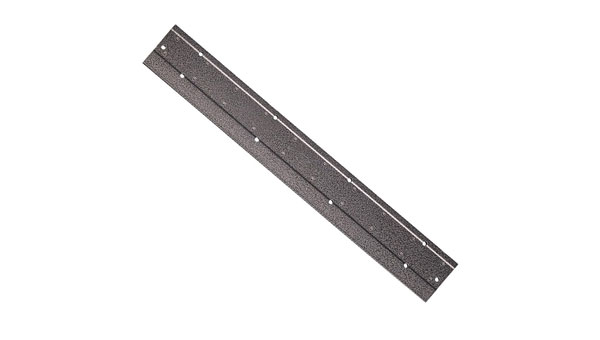
The standard seamers are available in 3- and 6-inch jaw widths, as well as an offset 3-inch size for overhead work. The drop-forged, high-impact jaws feature depth markings graduated in 0.25-inch increments and are complemented by a powerful compound leverage design. They can easily bend flanges or completely flatten seams from 0.25 to 1.25 inches deep in 24-gauge galvanized or mild steel.
How to camouflage your repair work
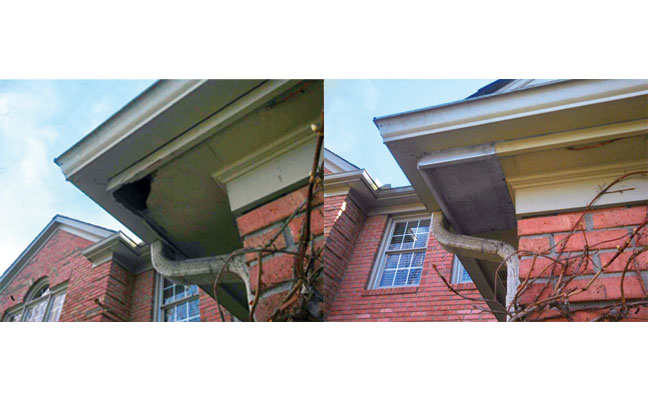
Blending metal with wood can be accomplished. The hard edges are what will draw the client’s eye, as well as the paint that doesn’t blend into the surrounding areas. Each hard edge is where metal stops and wood starts. This edge is hidden by blending.
Quality brands like NPC’s Solar Seal or AAC’s XclusionPro Super Sealant will be your go-to tools: Apply a bead on each edge cut, take your putty knife and pull sealant out onto wood and back onto metal — not too thick and not too thin. It takes a little work to get it right. Use a paintbrush to add texture if needed. A wet finger allows for slick, non-textured finishes. Add a little paint, then get off the ladder and inspect it from ground level.
The best thing is, if it doesn’t look good, go back up, take your putty knife and take off the sealant. Wipe the excess on a rag and start over. It doesn’t immediately set, so you can do it over and over until you get it right.
Practice at home or in the shop to build confidence before you jump right in, if that’s your preference. Personally, though, I like the challenge and push to get it right on a project that matters!
More Tools, for Good Measure
Equip your toolkit with simple but essential items for marking and measuring:
- A carpentry pencil
- A fine-tip Sharpie or other brand of permanent marker
- Measuring tape
- A metal scribe for marking and punching holes with a hammer and block of wood for easy screw-starting
3 Tips From the Trenches
To quickly build your skills and confidence in using these tools, follow these three practical steps:
- Practice Your Bends: Cut some of your metal at the office or at home and get to bending! Explore the bends and how each tool works. Mark a line less than “throat size” — the shortest distance from the root to the face of the weld, which is a key measure of a weld’s strength — and get intermediate bends. Once you’ve learned what your tools do, you’re ready to try them on a client’s property.
- Ensure Quality Aesthetics: Get bending and attaching, then get off your ladder, step back and, if you’re not willing to have it on your own house, start over or make it better. It’s that simple.
- Don’t Rush the First Jobs: Do not schedule these first jobs with a pressing schedule pushing you to rush. Try scheduling on a Saturday or the last part of a weekday when nothing else is scheduled. Quickness will come, but build your skills and confidence first.
In Summary
Starting a metal exclusion service doesn’t require a huge initial capital outlay. By making strategic investments in quality, low-cost hand tools — especially aviation snips, impact drivers and Malco hand seamers — you gain the capability to offer a high-margin, professional service.
About the Author

Charles Holt, CWCP, CNI, MN, is a board members of the National Wildlife Control Operators Association. Learn more at NWCOA.com.


Leave A Comment