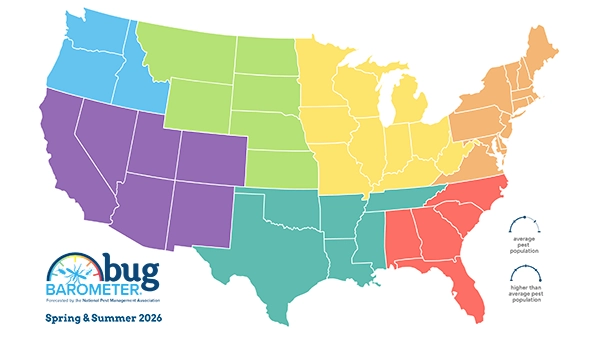
The National Pest Management Association (NPMA) has released its forecast for the spring and summer months. According to the bi-annual report, NPMA’s expert entomologists predict potential rising encounters with pests, including termites, ticks, ants, flies, mosquitoes, cockroaches, rodents, spiders, scorpions and stinging insects this spring and summer
For the full interactive map, visit here.
2026 regional bug breakdown
The report dives into seven regions in the contiguous U.S. Including the Mid-Atlantic and New England, Intermountain and Southwest, South Central, North Central, Great Lakes, Ohio Valley and Midwest, Southeast and Northeast.
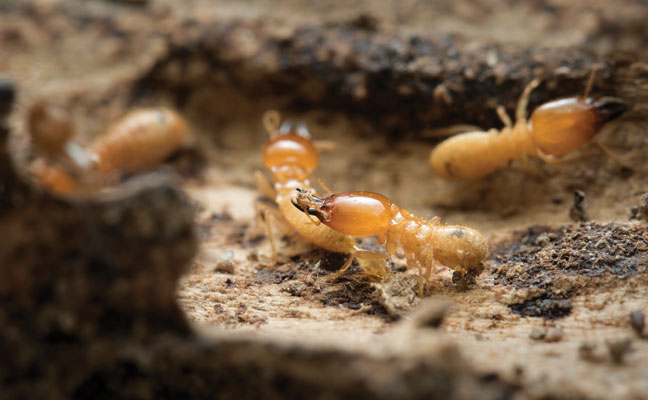
Maine, New Hampshire, Vermont, Massachusetts, New York, Rhode Island, Connecticut, New Jersey, Pennsylvania, Delaware, Maryland, Washington, D.C. and Virginia.
A mild start to the winter and drier spring will jumpstart pest season, with termites, brown marmorated stink bugs and Asian lady beetles emerging ahead of schedule. As temperatures rise, expect more ticks and stinging insects.
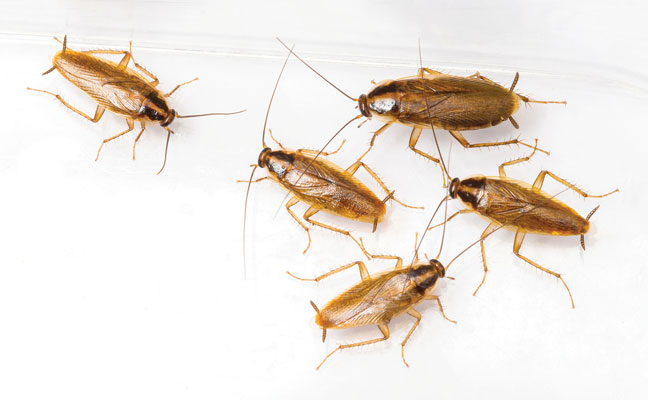
New Mexico, Arizona, Utah, Colorado, Nevada and California
Warmer winter temperatures could create thriving conditions for cockroaches and flies throughout spring and summer. Later monsoon rains will drive scorpions and spiders indoors as they seek shelter.
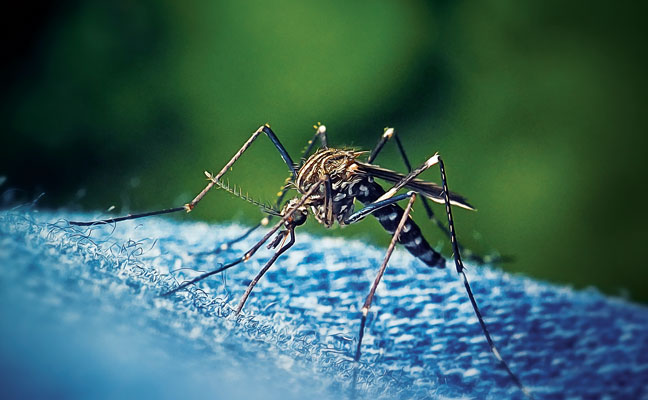
Mississippi, Tennessee, Louisiana, Arkansas, Oklahoma and Texas
Despite a cold winter, a mild, damp spring is likely to create ideal conditions for termites, ticks and mosquitoes to surge early. Heavy summer rains and tropical storms will provide perfect breeding grounds for flies.
North Dakota, South Dakota, Nebraska, Kansas, Montana and Wyoming
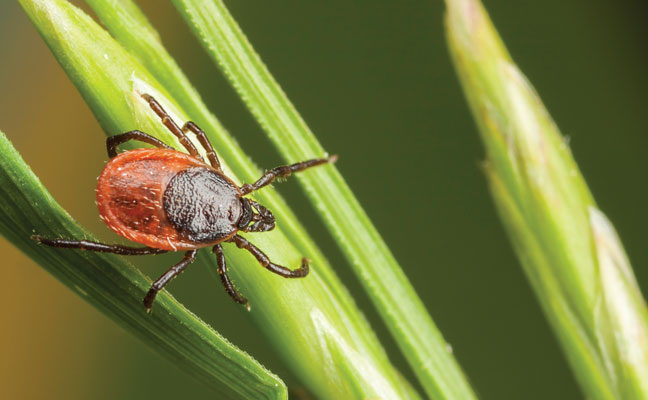
Warmer spring conditions could trigger an early tick season, while late-season rainfall will spike fly and cockroach activity. Midsummer will bring pressure from yellowjackets and wasps if the forecasted above-average temperatures arrive.
West Virginia, Ohio, Kentucky, Indiana, Michigan, Wisconsin, Illinois, Iowa, Missouri and Minnesota
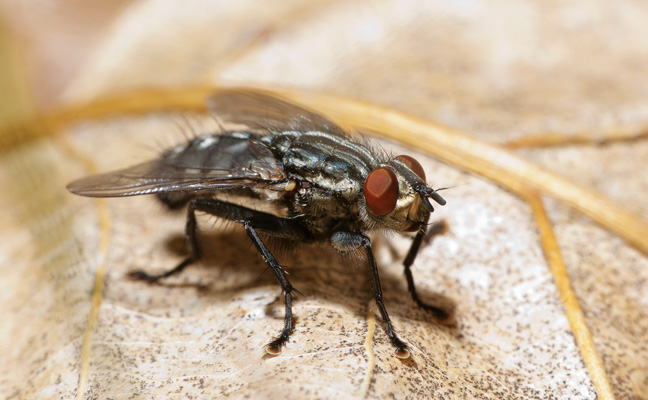
Rising spring temperatures are expected to trigger pest pressures sooner than usual. Summer conditions will spike fly and tick activity and ant and cockroach invasions indoors following heavy rainfall.
North Carolina, South Carolina, Georgia, Alabama, Florida
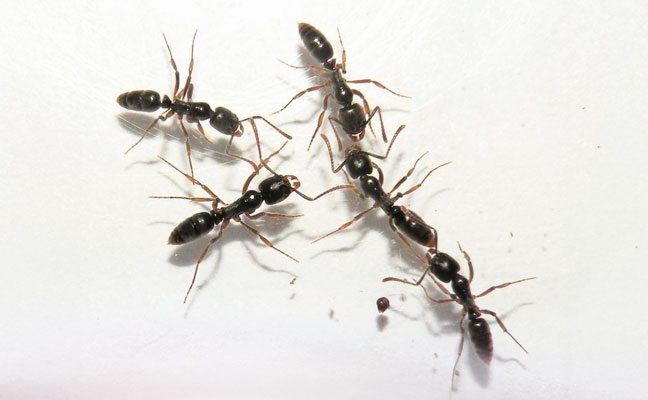
A warm, wet spring may boost activity among termites, mosquitoes and ants earlier than years before. Summer will increase fly and cockroach pressure, with tropical storms triggering mosquito surges from standing water.

Idaho, Washington and Oregon
Mild winter and spring conditions could send ants and stinging insects out early, as cockroaches and rodents seek water indoors. Summer brings more mosquitoes and flies north and yellowjackets and ants south.
Previous report trends
2025: Entomologists predicted earlier and increased activity from ticks, mosquitoes, ants and cockroaches, meaning more frequent pest encounters outdoors and inside homes.
2024: NPMA expert entomologists predicted earlier and more active populations of pests such as ticks, mosquitoes, ants and others in many regions, with conditions this year likely to boost pest activity beyond typical seasonal patterns.
2023: The NPMA predicted that during spring and summer pests like ants, mosquitoes, ticks, termites, spiders and others were expected to become more common and active.
About the Author

RJ Simon is the digital media specialist for PMP magazine. He can be reached at rsimon@northcoastmedia.net or (216) 675-6001.


Leave A Comment