New research from Georgia Institute of Technology and Massachusetts Institute of Technology (MIT) has provided a detailed analysis of how mosquitoes locate and approach human hosts, based on controlled experimental observation and modeling.
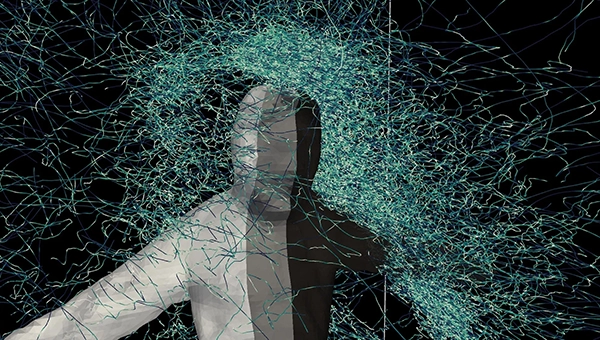
Using 3D infrared imaging, researchers tracked hundreds of female Aedes aegypti and analyzed approximately 20 million flight data points to characterize movement patterns and decision-making behavior.
The study found that mosquito aggregation is not driven by following behavior. Instead, each mosquito responds independently to environmental cues, yet converges spatially when those cues are aligned.
Two primary stimuli were identified:
- Visual cues (specifically dark objects)
- Carbon dioxide (CO₂)
Individually, each cue produced limited or conditional attraction:
- A dark visual target attracted mosquitoes already in flight toward it, but did not result in sustained activity.
- CO₂ enabled mosquitoes to locate a target at close range, with brief investigative behavior observed.
When both visual cues and CO₂ were present simultaneously, the response was significantly amplified. Mosquitoes:
- Swarmed the target area
- Remained in proximity
- Attempted to feed
The researchers developed a mathematical model describing how mosquitoes adjust flight direction, speed, and movement patterns in response to these combined signals. To view and test the model, click here.
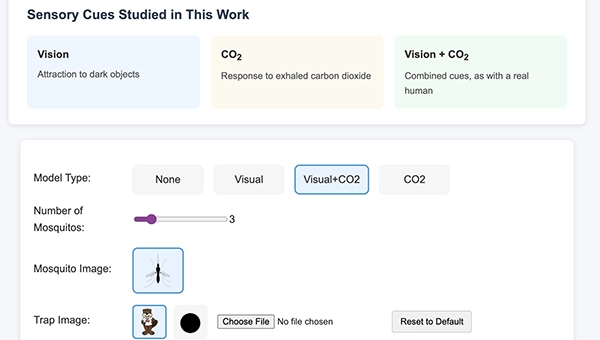
The work represents the first detailed visualization of mosquito flight behavior in relation to host detection and provides quantifiable data on how multiple sensory inputs are integrated during host-seeking.
The findings indicate that mosquito attraction is driven by the interaction of sensory cues rather than a single factor, and that behavioral responses change based on cue combinations and proximity to the target.
Full research piece
To read the full piece, visit: https://www.sciencedaily.com/releases/2026/03/260322020247.htm
About the Author

RJ Simon is the digital media specialist for PMP magazine. He can be reached at rsimon@northcoastmedia.net or (216) 675-6001.



Leave A Comment