Carpet beetles (Dermestidae) are versatile invaders, infesting everything from furniture and clothing to stored food products. To achieve long-term success, pest management professionals (PMPs) must look beyond the initial sighting and implement a comprehensive management plan.
Key Takeaways
- Source identification: Thoroughly inspect not just textiles, but also dry goods like cereals and pet food where beetles frequently breed.
- Pheromone monitoring: Use strategic trap placement to assess the severity of the infestation and guide treatment adjustments.
- Collaborative control: Success hinges on customer involvement, from laundering fabrics at high temperatures to regular vacuuming and following up on potential breeding sources.
Precision inspection: Locating the source
Locating and eliminating the source of a carpet beetle infestation is the foundation of any successful program. PMPs must check carpets, rugs, and upholstery for signs of larvae, shed skins or adult beetles.
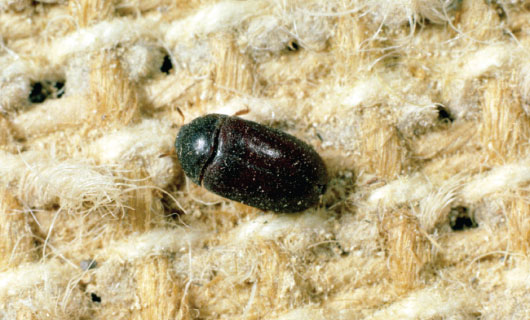
Do not limit your search to floor coverings; inspect closets and storage areas for visible damage to clothing. Additionally, inspecting stored food items — particularly dry goods such as cereals, grains and pet food — is crucial, as these are known infestation sites.
The role of pheromone monitoring
Monitoring plays a vital role in managing these pests. Strategically placing pheromone traps in suspected areas helps identify the presence of an infestation and monitor its severity. These traps attract adult beetles, providing a clear indication of activity levels. Regularly checking and replacing these traps allows for ongoing assessment and the adjustment of your treatment strategies based on hard data.
Integrated treatment strategies
Effective control often requires a combination of measures. Thorough vacuuming is a fundamental step to remove adults, larvae, and eggs. For fabrics and furniture, steam cleaning can be highly effective. Affected clothing and fabrics should be laundered at high temperatures to eradicate hidden life stages. In cases where infestations are severe or persistent, professional insecticides may be required to supplement these physical removal methods.
Fostering the customer partnership
Creating a partnership with customers is crucial. By involving them in the inspection process and providing information on breeding sources, customers become active participants in the eradication efforts. This collaboration fosters a sense of shared responsibility and enhances the overall effectiveness of the treatment.
Setting expectations for long-term success
PMPs must set clear expectations regarding the timeline and potential follow-ups. Regular re-inspections are recommended to assess treatment effectiveness and address any new breeding sources that may emerge. Because pest situations evolve, flexibility and adaptability are key. Continuous evaluation and a willingness to adapt your plan to changing circumstances are vital for achieving long-term success in eradicating carpet beetles.
- Florian, M.-L. (1997). Heritage Eaters:
Insects and Fungi in Heritage Collections.
James & James. - Strang, T.J.K. (1997). “Controlling Insect
Pests with Low Temperature.” CCI Notes 3/3.
Canadian Conservation Institute
About the Author

Dr. Mohammed El Damir, BCE, is technical and training director of Adam’s Pest Control, Medina, Minn.





Leave A Comment